Smallmouth Bass: Complete Species Guide
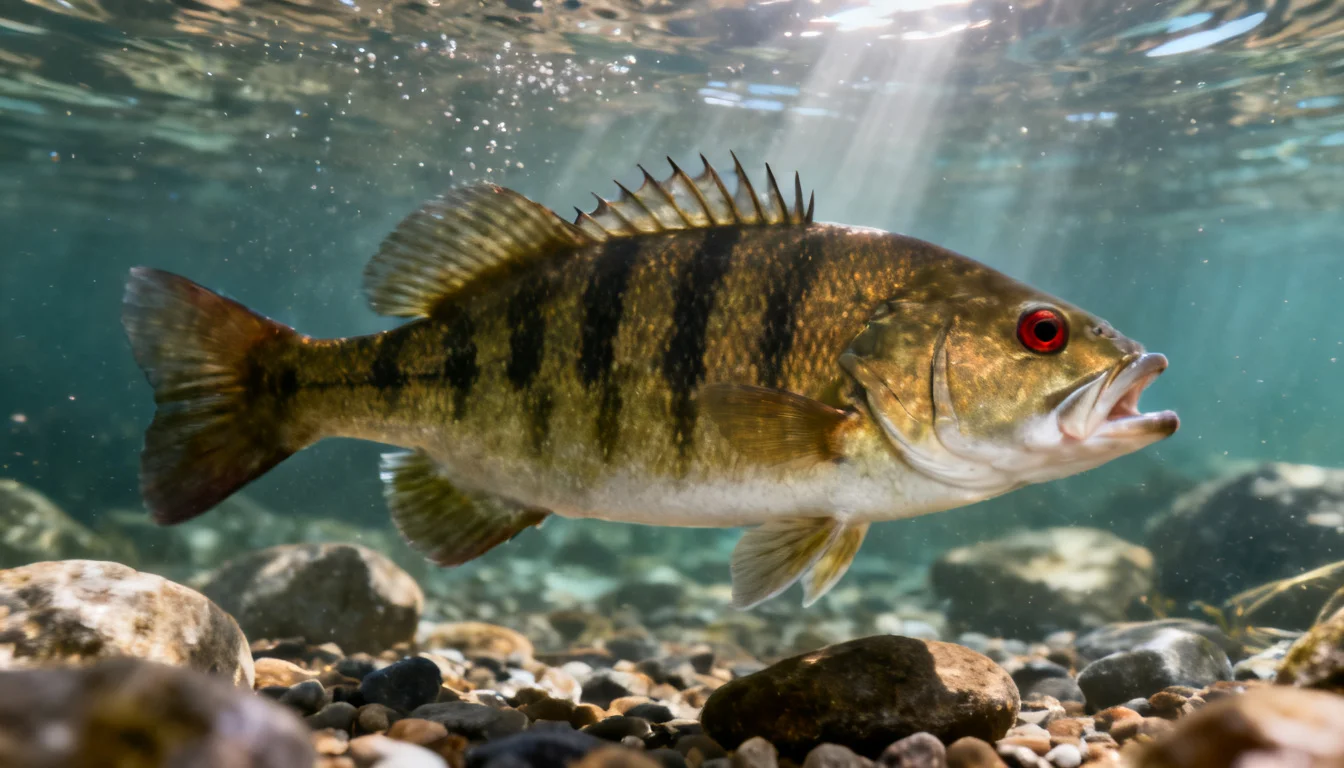
If the largemouth bass is America's most popular game fish, the smallmouth bass (Micropterus dolomieu) is its toughest, most athletic cousin. Nicknamed "bronzeback" for its copper-bronze flanks, the smallmouth is a cold-water, clear-water fighter that pulls like a fish twice its size.
This complete smallmouth bass guide covers how to identify them, where they live, what they eat, how big they get, and the best ways to catch one.
Why Smallmouth Bass Are So Loved
Ask any angler who's hooked both, and most will tell you the smallmouth fights harder pound-for-pound than any other freshwater fish:
- Fierce fighters — smallmouths make explosive runs, jump repeatedly, and dive for rocks; they rarely give up early
- Beautiful fish — bronze-gold flanks with dark vertical bars and red eyes make them one of the prettiest game fish
- Demanding but rewarding — they live in clear, clean water and reward skilled casting
- Great table fare — firm white fillets, generally better eating than largemouth
How to Identify a Smallmouth Bass
Smallmouth and largemouth bass are easy to confuse at a glance, but the smallmouth bass vs largemouth comparison comes down to a few features that separate them instantly:
| Feature | Smallmouth Bass | Largemouth Bass |
|---|---|---|
| Mouth size | Jaw ends at or before the eye | Jaw extends past the eye |
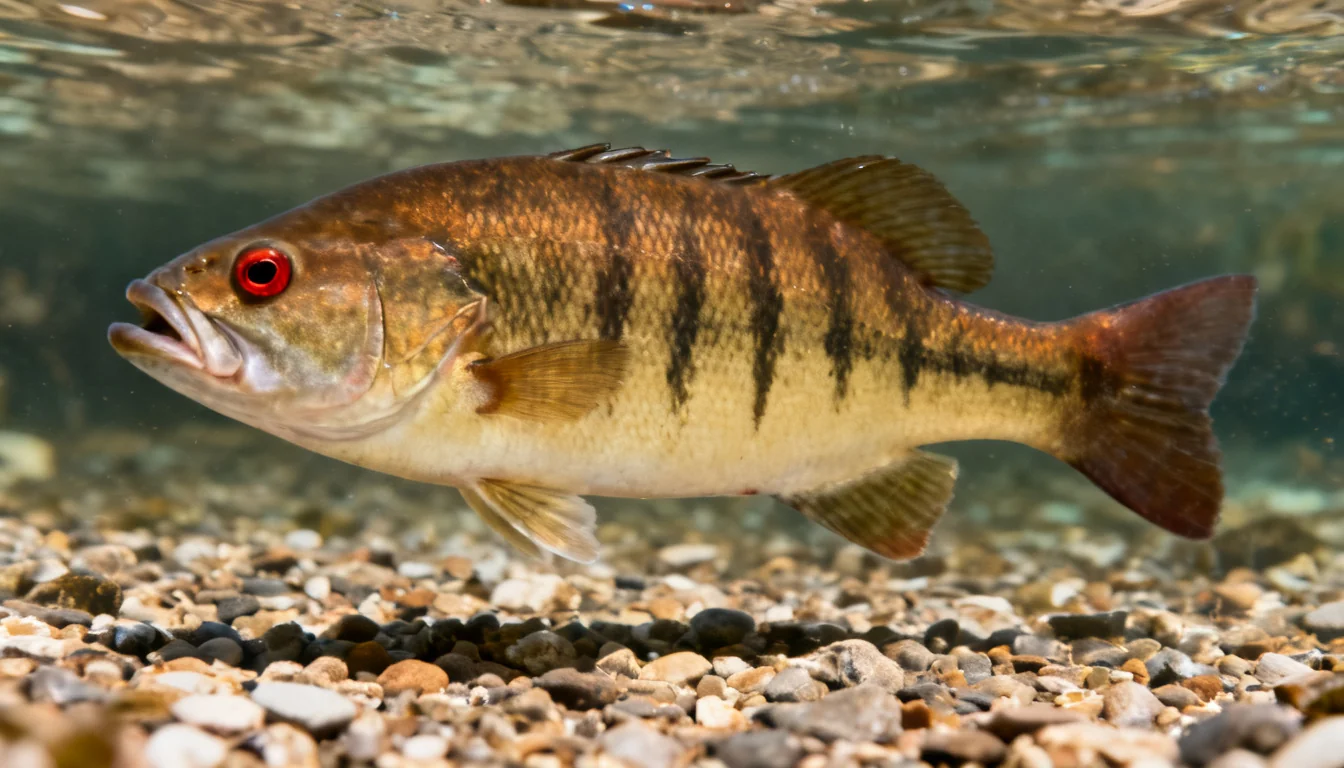
| Body color | Bronze to olive-brown | Green to olive |
| Markings | Dark vertical bars on flanks | Dark horizontal band |
| Dorsal fin | Shallow notch | Deep notch |
| Eye color | Often reddish-bronze | Usually dark |
| Preferred water | Cooler, clearer, rockier | Warmer, weedier |
The mouth rule is the classic ID trick: if the jaw doesn't reach past the eye, it's a smallmouth. They're also sleeker and more torpedo-shaped than the deep-bodied largemouth — see our largemouth bass species guide for the full comparison.
Smallmouth Bass Behavior & Habits
Cold-water specialists. Smallmouths prefer water temperatures of 60-75°F — cooler and cleaner than what largemouths tolerate. They're most active when water is 65-72°F, and they'll seek out colder pockets in summer (springs, deep holes, river current).
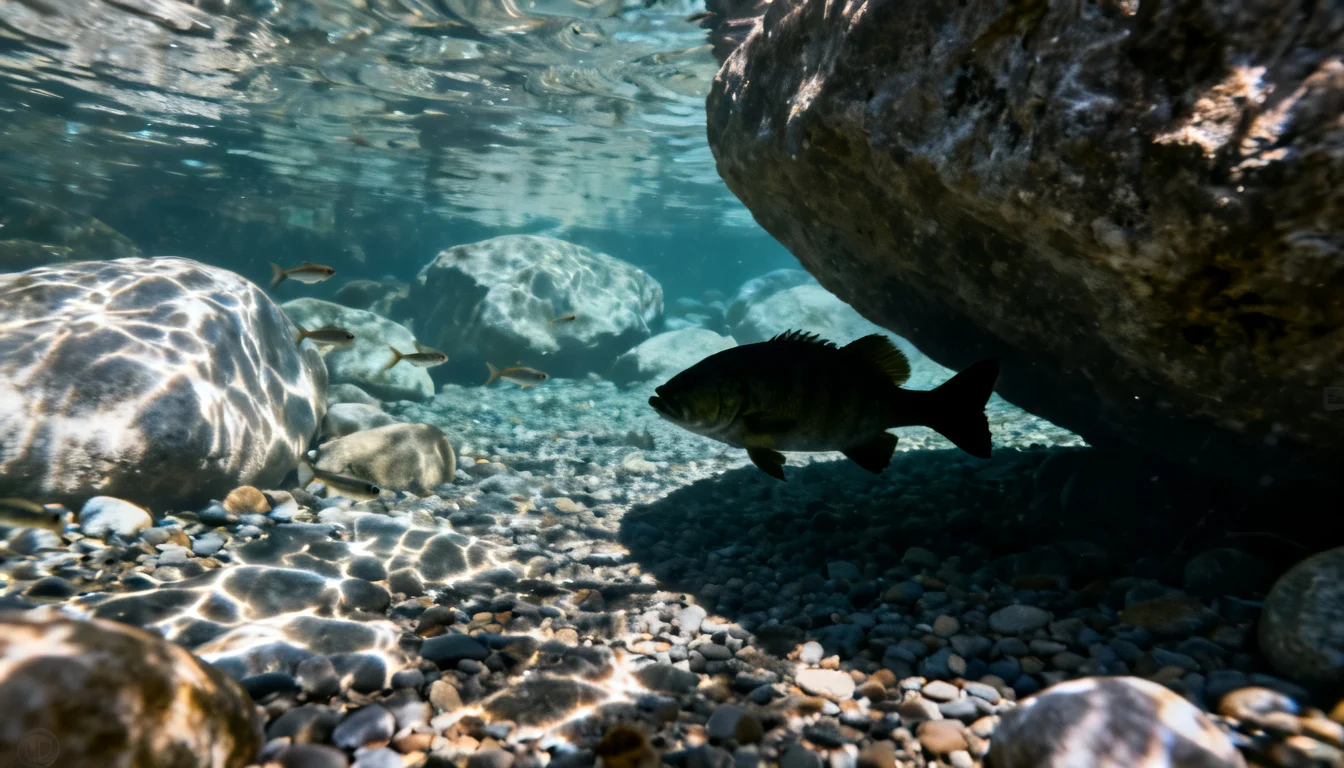
Structure-oriented, not weed-oriented. Where largemouths hide in weeds and timber, smallmouths hold on rocks: boulder fields, gravel flats, rocky points, ledges, and river riffles. The universal rule: find rock, find smallmouth.
Current feeders. In rivers, smallmouths sit in the slack water beside current — behind boulders, in eddies, at the heads of pools — waiting for food to drift by. They're one of the few bass that thrive in moving water.
Aggressive and acrobatic. Smallmouths are known for violent strikes and spectacular aerial fights, often jumping several times in a single battle. This is why they're a favorite of fly anglers and light-tackle enthusiasts.
Smallmouth Bass Habitat: Where They Live in the US
Smallmouth bass are native to the eastern and central United States and southern Canada, from the St. Lawrence River through the Great Lakes and down the Mississippi, Ohio, and Tennessee river systems. Today they're found in most states, with the best fisheries in:
- Great Lakes — Lake Erie and Lake Ontario are world-famous smallmouth fisheries with huge average sizes
- Tennessee River system — Pickwick Lake, Kentucky Lake, and Dale Hollow produce giants
- Northern rivers — the Susquehanna, Shenandoah, and countless smaller rivers hold excellent populations; our how to fish a river guide covers the structure basics
- Canadian Shield lakes — Ontario and Quebec offer outstanding numbers of bronzebacks
- Ozarks — Table Rock Lake and Bull Shoals are smallmouth strongholds
Within a water body, smallmouths hold in:
- Rock piles and boulder fields
- Points and rocky ledges
- Current seams and eddies in rivers
- Deep holes beside riffles
- Gravel flats near drop-offs
- Coves with clear, cool water
What Do Smallmouth Bass Eat?
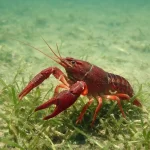
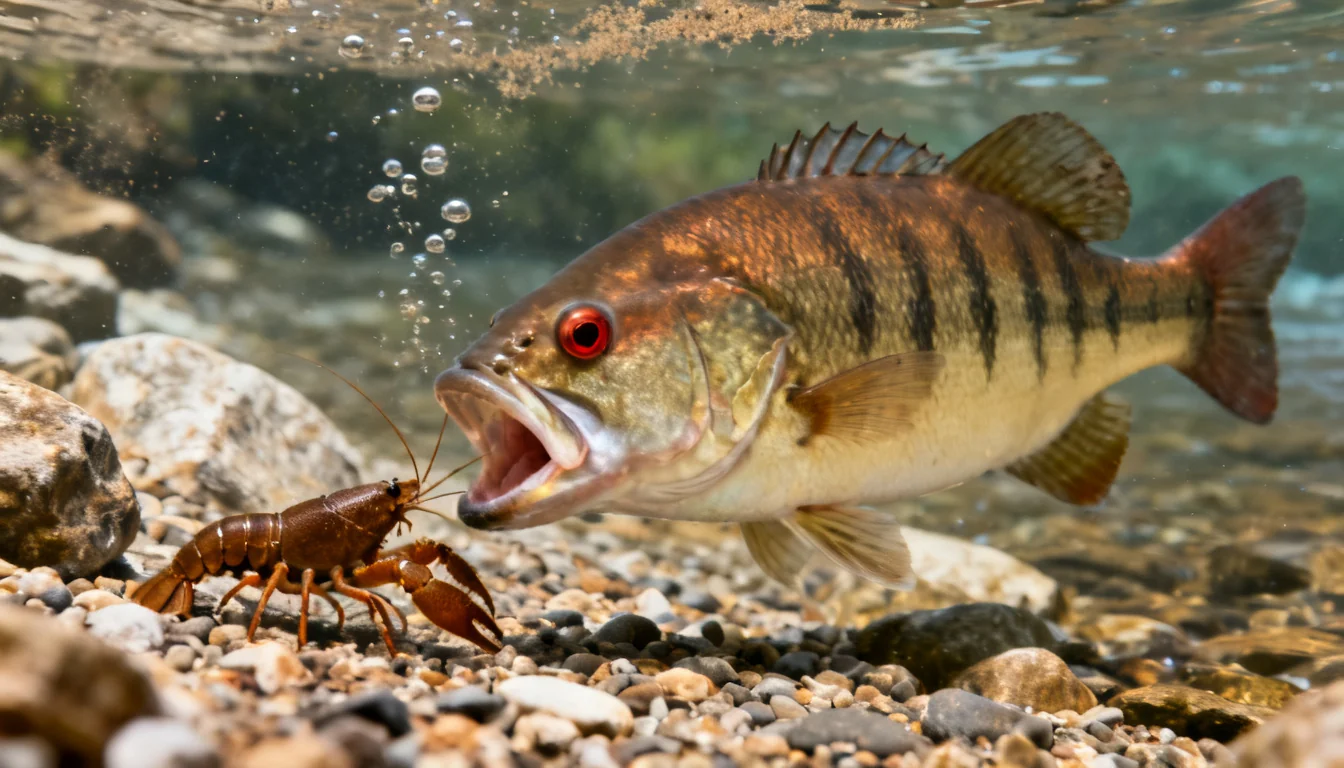
Smallmouths are opportunistic predators with a strong preference for crayfish — in many rivers and rocky lakes, crawdads make up half their diet. Other staples:
| Prey | When it matters |
|---|---|
| Crayfish | Year-round; the #1 smallmouth food almost everywhere |
| Minnows & shad | Summer, especially in lakes |
| Aquatic insects | Spring and summer; important for fly fishing |
| Hellgrammites | Spring in rivers — a classic smallmouth bait |
| Frogs & leeches | Late summer evenings |
| Small fish | Fall, when smallmouths bulk up for winter |
Matching the menu: when smallmouths are feeding on crayfish, brown/green jigs and tubes with craw trailers outfish everything. When they're chasing baitfish, minnow-pattern crankbaits and spinnerbaits shine.
Best Ways to Catch Smallmouth Bass
The full tactics guide is in our companion article — How to Catch Smallmouth Bass — but the essentials:
Top smallmouth bass fishing tips & baits:
1. Tube jigs — the classic smallmouth bait; deadly on rocks and gravel
2. Jig + craw trailer — matches the crayfish diet perfectly
3. Crankbaits — great for covering points and ledges
4. Spinnerbaits — effective in current and stained water
5. Topwater (poppers, buzzbaits) — explosive strikes at dawn in summer
6. Live bait — hellgrammites, crayfish, and minnows when lures won't work
Smallmouth bass fishing peaks in two windows:
- Spring (55-65°F) — pre-spawn smallmouths move shallow and feed aggressively; the best chance at big fish
- Summer — early morning topwater and evening fishing; deep rock structure midday
- Fall — smallmouths school up and feed heavily; some of the best action of the year
- Winter — slow presentations on deep rocks; fishing slows dramatically
Smallmouth Bass Size: How Big Do They Get?
Typical size: most smallmouths caught are 10-18 inches and 1-3 pounds. A 4-pounder is a very good fish; a 5-6 pound smallmouth is a trophy in most of the country.
Growth by region:
- Northern lakes (Great Lakes): slow growth, but huge maximum size — Lake Erie consistently produces 5-7 lb bronzebacks
- Southern rivers: faster growth, smaller maximum size (3-5 lb typical of giants)
- Canadian Shield lakes: slower still, but outstanding numbers
Records:
- World record (IGFA): 11 lb 15 oz — caught by David L. Hayes in Dale Hollow Lake, Tennessee, in 1955
- State records: most states list smallmouth records between 6-9 lb
A smallmouth over 6 pounds is a fish of a lifetime for most anglers.
Are Smallmouth Bass Good to Eat?
Yes — smallmouth bass are generally better eating than largemouths. Their white, firm, mild fillets are excellent pan-fried, grilled, or baked, especially when caught from cold, clean water. Smaller fish (1-3 lb) taste best. As with all bass, check local consumption advisories, and many anglers practice catch-and-release to protect trophy fisheries.
Smallmouth Bass FAQ
Do smallmouth bass bite at night?
Yes — especially in summer and in clear lakes. Smallmouths feed in low light, and night fishing with topwater lures, spinnerbaits, or jigs along rocky shorelines produces big fish. Moonlit nights over shallow rock flats are the classic pattern.
How long do smallmouth bass live?
Typically 10-15 years in the wild, with the oldest fish reaching 18 or more. Northern smallmouths grow slowly and live longest; southern fish grow faster but die younger.
Can you catch smallmouth bass from the shore?
Absolutely. Lake shorelines with rocky points and gravel banks hold smallmouths, and in rivers, bank and wading anglers catch them regularly by working current seams and eddies within casting range.
Do smallmouth bass live in rivers or lakes?
Both. Smallmouths are native to rivers and cool natural lakes, and they thrive in reservoirs too. In rivers they hold in current breaks; in lakes they patrol rocky structure — the "find rock, find smallmouth" rule applies everywhere.
What is the best time of day to fish for smallmouth bass?
Dawn and dusk are the classic windows, especially in summer. Spring and fall often produce all day, and overcast days extend the bite well past the usual morning and evening peaks.
What size smallmouth bass should you keep?
Most states use a 12-14 inch minimum and generous creel limits; 12-15 inch fish are ideal eating size. A 4-pounder is a trophy to most anglers — consider releasing it to protect the fishery. Always check local regulations.